 how-to
How to Plan Emergency Plumbing Service for Businesses
Last Updated: November 5, 2026
Quick Summary
Build an emergency plumbing plan for your business by naming one point person who owns the plumber call and water shut-off, mapping and labeling your shut-off valves, and posting your plumber's 24-hour line at the front desk. Set a triage rule for what counts as an emergency, assign cleanup roles, and review the plan twice a year.
- Restaurants should treat sewage backups, no hot water, or a gas smell as emergencies.
- Staff should shut off water if safe, move valuables, and photograph damage while waiting.
- Ask whether the service call fee is credited toward the repair if you approve the work.
- Name at least two employees who can approve emergency work, including one reachable after hours.
- Test backflow preventers on the schedule your water authority requires.
Table of Contents
- Why Every Business Needs an Emergency Plumbing Plan
- Step-by-Step: Building a Commercial Plumbing Emergency Response Plan
- What Emergency Plumber Cost for Businesses Actually Covers
- Commercial Plumbing Preventive Maintenance That Prevents 2 AM Calls
- Commercial Plumbing Maintenance Contract Pricing: What to Expect
- How to Vet a 24-Hour Commercial Plumber Before You Need One
- Request Emergency Plumbing Service for Your Business
- Frequently Asked Questions
Why Every Business Needs an Emergency Plumbing Plan
A burst pipe at 2 AM does not wait for a committee meeting.
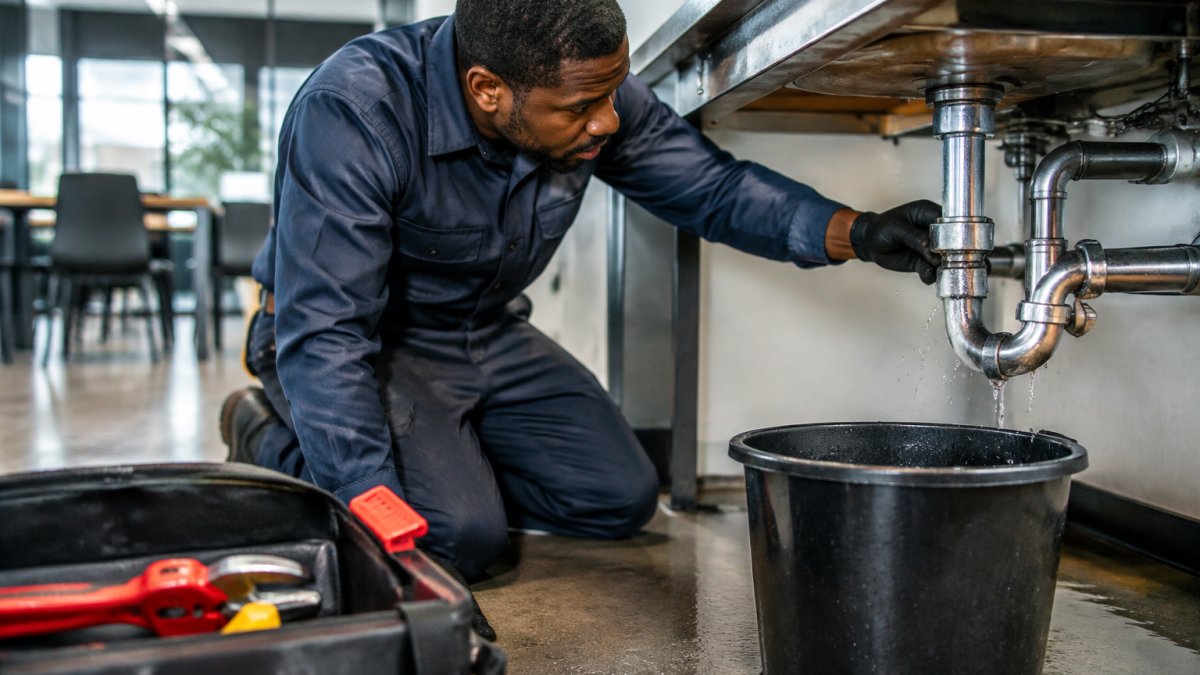
Emergency plumbing is the branch of plumbing work that handles urgent failures: burst pipes, sewage backups, gas leaks, failed water heaters, and no-water situations that stop operations cold.
The businesses that recover fastest are not the ones with the biggest budget. They are the ones who wrote down who to call and what to do before anything went wrong.
Step-by-Step: Building a Commercial Plumbing Emergency Response Plan
A commercial plumbing emergency response plan is a short written document that tells your staff exactly who does what when water starts moving where it shouldn't.
- Name a point person. One employee owns the call to the plumber and the decision to shut off water.
- Map your shut-off valves. Label the main water valve, individual fixture valves, and the gas shut-off. Show them on a simple floor plan.
- Post the emergency number. Put your plumber's 24-hour line next to the shut-off location and at the front desk.
- Set a triage rule. Decide in advance what counts as an emergency versus a next-morning repair.
- Assign cleanup roles. Someone calls the plumber. Someone moves stock or equipment. Someone documents damage with photos.
- Review it twice a year. Staff turnover is the biggest reason plans fail.
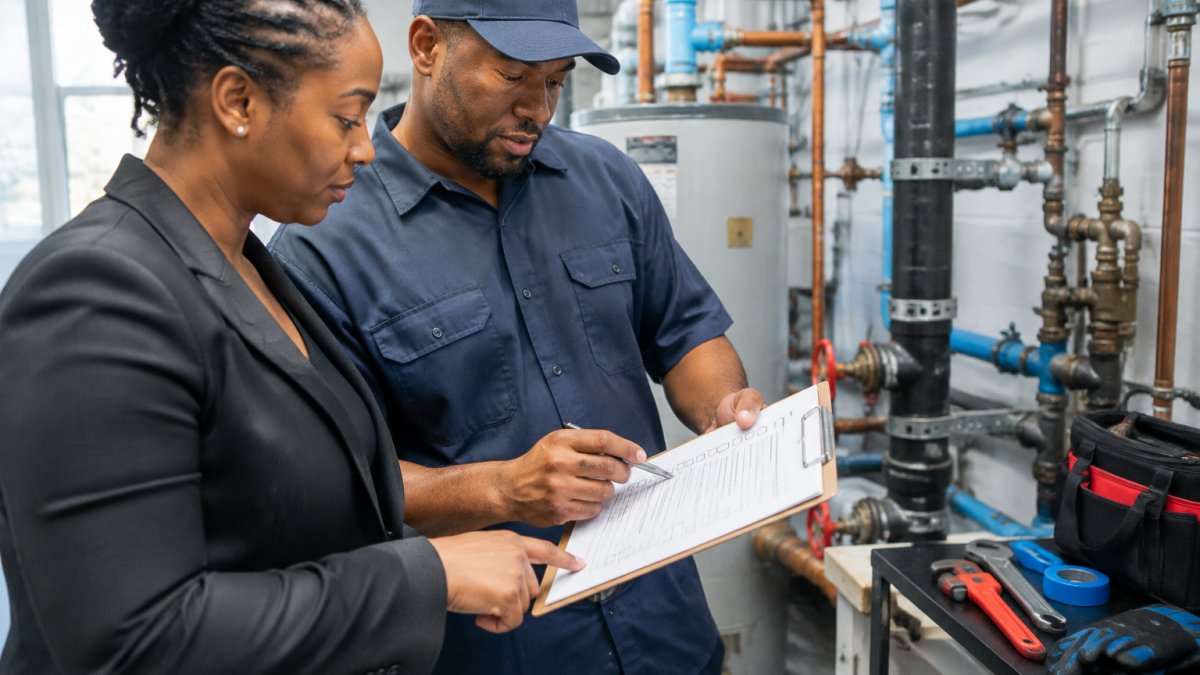
Triage by Facility Type: What Counts as an Emergency
What counts as an emergency depends on what the building does. A slow drain in an office kitchen can wait. A slow drain in a restaurant kitchen during service cannot.
- Restaurants and food service: Sewage backup, no hot water, or a gas smell. Health rules and service schedules leave no room to wait.
- Retail: Active water leaks near inventory or electrical panels. Water damage spreads fast through shelving and stockrooms.
- Office buildings: Overflowing toilets, burst supply lines, and any leak near server rooms or electrical closets.
- Warehouses: Sprinkler failures, main line breaks, and sump pump failures during storms.
The rule of thumb: if the problem threatens safety, shuts down operations, or is actively causing damage, treat it as an emergency.
What Employees Should Do While Waiting for the Plumber
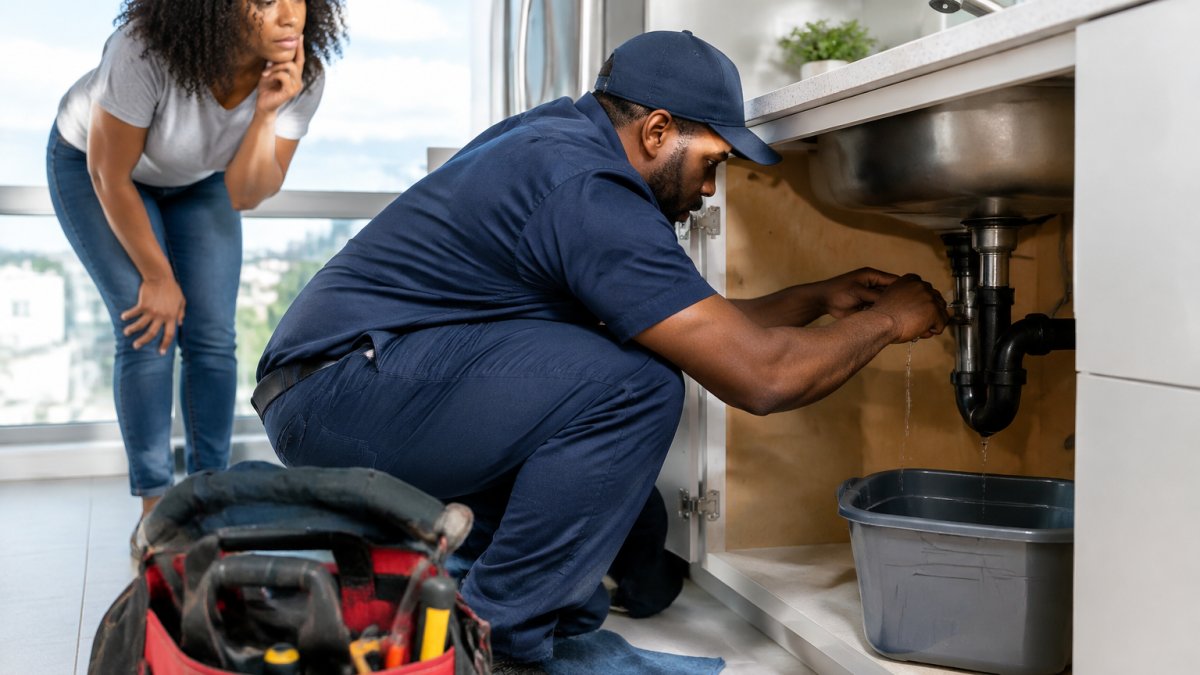
Staff should shut off the water if it is safe, move people and valuables away from the affected area, and document the scene with photos.
A common mistake is employees trying to "fix" a leak with tape or continuing to use fixtures that are backing up. That turns a repair into a restoration job.
Here is the six-step plan the article recommends building in an afternoon.
| Step | What to do | Frequency |
|---|---|---|
| Name a point person | One employee owns the plumber call and water shut-off | Ongoing |
| Map shut-off valves | Label main, fixture, and gas valves on a floor plan | Ongoing |
| Post the emergency number | Put the 24-hour line by the shut-off and front desk | Ongoing |
| Set a triage rule | Decide what counts as an emergency versus next-morning repair | Ongoing |
| Assign cleanup roles | Caller, stock mover, and damage photographer | Ongoing |
| Review the plan | Staff turnover is the biggest reason plans fail | Twice a year |
What Emergency Plumber Cost for Businesses Actually Covers
Emergency plumber cost for businesses is rarely a single flat number. It reflects when you call, what failed, and how fast you need someone on site.
A commercial emergency plumbing invoice typically bundles several distinct charges. Understanding each line item before you approve work is the difference between a controlled expense and a billing dispute.
- Dispatch or service call fee. Ask whether the fee is credited toward the repair if you approve the work.
- After-hours and holiday premium. Confirm whether a premium applies, and the exact window it covers.
- Diagnostic and camera inspection fee. Ask whether the diagnostic charge is waived if you proceed with the repair.
- Repair labor and materials. Quoted after diagnosis, based on the failed component, access difficulty, and parts availability.
- Water extraction and restoration. Drying, mold remediation, and structural restoration are usually separate trades and separate invoices.
Watch out: a quote that only covers the visit, not the repair, can lead to billing surprises.
Approval and Authorization Workflow
Set up an authorization process before an emergency hits so a plumber can start work without waiting on a signature.
- Designate authorized approvers. Name at least two employees who can approve emergency work, including one who is reachable after hours.
- Set a spending threshold. Decide what dollar amount an approver can authorize without escalation, and who handles amounts above it.
- Require a written estimate. Ask the plumber to send the estimate by email or text so the approver has a record.
- Confirm payment methods. Establish which payment methods the company accepts and whether a deposit is required for large repairs.
- Collect the invoice. Keep a copy of each invoice for your records.
Response Windows and Service-Level Expectations
Ask prospective plumbers what response window they commit to for commercial calls. Some plumbers quote a target arrival window rather than a guaranteed time. Clarify whether the window starts at the call or at dispatch, and whether the dispatcher will call ahead with an estimated arrival time.
For a clearer picture of how charges break down, see our breakdown of what emergency plumbing in Miami actually costs you.
Commercial Plumbing Preventive Maintenance That Prevents 2 AM Calls
Most after-hours emergencies start as small problems someone ignored. A commercial plumbing preventive maintenance routine catches them first.
- Flush and test water heaters regularly, including the pressure relief valve.
- Clear slow drains before they clog completely.
- Inspect supply lines and shut-off valves for corrosion.
- Test backflow preventers on the schedule your water authority requires.
- Check sump pumps before storm season.
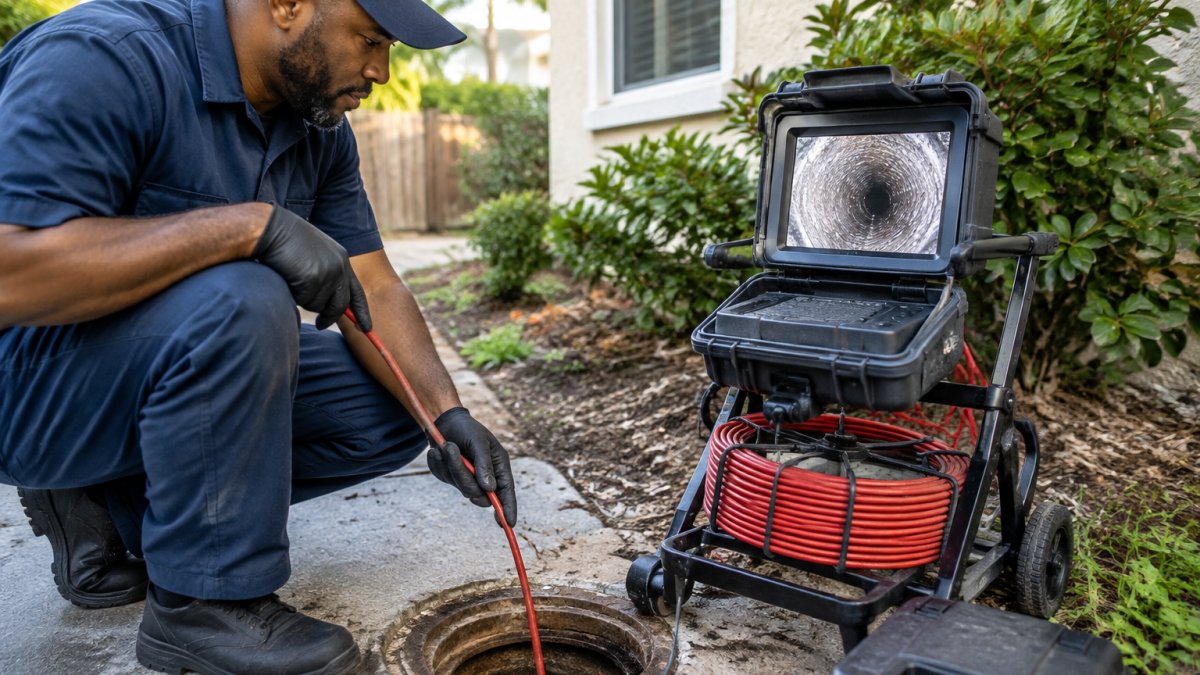
Older buildings deserve special attention. Cast iron and galvanized lines can corrode from the inside out, and a camera inspection can show the condition of a line before it fails.
Commercial Plumbing Maintenance Contract Pricing: What to Expect
Commercial plumbing maintenance contract pricing depends on factors such as the number of fixtures, building age, and how often you want inspections. Contracts are often priced per visit or as an annual fee. Request a quote for current pricing.
Maintenance contracts are commonly structured in a few ways, and each shifts risk differently between the business and the plumbing contractor.
- Per-visit pricing. You pay a fixed fee for each scheduled inspection or service call. Predictable for low-fixture sites, but you absorb the cost of extra visits and after-hours emergencies.
- Annual fixed fee. A single annual price covers a set number of inspections and defined services. Easier to budget, but read the scope carefully: many contracts exclude parts, major repairs, and after-hours dispatch.
- Hybrid or membership model. A lower annual fee plus discounted labor and priority scheduling. Common for multi-site operators who want predictable response without a large fixed commitment.
What a Contract Should Spell Out
What matters more than the headline number is what the contract includes. Ask whether it covers after-hours priority, parts, or just labor. A well-written agreement addresses the following:
- Scope of scheduled services. List every inspection, test, and adjustment included, such as water heater flush, backflow preventer testing, drain snaking, and shut-off valve exercise.
- Response time commitment. Define the target response window for emergency calls and whether contract accounts move ahead of non-contract callers.
- Labor and parts pricing. State the hourly rate, after-hours multiplier, and markup on parts, or confirm that they are billed at standard rates.
- Exclusions. Identify what is not covered, such as water damage restoration, permit fees, and major equipment replacement.
- Term, renewal, and cancellation. Note the contract length, auto-renewal terms, and notice period for cancellation.
- Reporting. Ask for a written inspection report after each visit, including photos and recommended repairs, which supports budgeting and insurance documentation.
Watch out: a low annual fee can hide a narrow scope that excludes the very services you need most, such as after-hours dispatch or backflow testing. Compare the total cost of ownership, not just the contract price.
Building a Prevention and Continuity Plan Around the Contract
A maintenance contract works best when paired with an internal prevention routine. Assign someone to log every plumbing issue, even minor ones, and review the log before each scheduled visit.
For multi-site businesses, consider whether a single contract covering all locations produces better response terms than separate local agreements.
For a fuller picture of how these contracts are priced, read our guide to commercial plumbing maintenance contract pricing.
How to Vet a 24-Hour Commercial Plumber Before You Need One
Vet a 24-hour commercial plumber by calling their after-hours line and timing the response before you have an emergency. A company that answers after hours on a weekday is worth testing before you need it on a weekend.
Ask three questions:
- Is someone actually dispatched, or does a call center take a message?
- Are your plumbers licensed and insured?
- Do you diagnose with camera inspection before quoting a dig?
For a wider look at choosing a reliable after-hours team, see our guide to the best 24/7 plumbing services in Miami for urgent repairs.
Request Emergency Plumbing Service for Your Business
The best time to choose an emergency plumber is before you need one. Save the number, label your shut-off valves, and know who to call when water is moving.
Authentic Plumbing Services is open 24 hours, 7 days a week for homes, condos, and businesses. The team uses camera inspection to identify the real cause before work begins, and offers drain and line clearing as well as professional installation and repair of fixtures and water heaters.
See our full plumbing services in Miami lineup, or contact our team to get a quote and dispatch a plumber now.
Frequently Asked Questions
What is considered an emergency plumbing service for a business?
An emergency plumbing service for a business is any plumbing failure that threatens operations, safety, or property. That includes burst pipes, sewage backups, gas leaks, no running water, and water heater failures in food service or hospitality settings. A slow drain or a dripping faucet is usually a scheduled repair, not an emergency. The test is simple: can the business keep operating safely while the problem waits for a normal appointment? If not, call for emergency plumbing service.
How quickly can an emergency plumber respond to a commercial property?
Response time depends on the provider and the time of day. A 24-hour service with local dispatch can often have a plumber on site within a few hours, and faster for active flooding. Ask for a stated response window before you sign anything. Authentic Plumbing Services is open 24 hours, 7 days a week and serves commercial properties.
How much do emergency plumbing services cost for businesses?
Emergency plumber cost for businesses depends on the time of the call, the type of failure, and the access required. After-hours calls typically carry a higher rate than weekday work, and a burst pipe under a slab costs more to reach than a leaking supply line above ground. Request a quote from Authentic Plumbing Services for current pricing.
How can a business reduce damage from a burst pipe or sewer backup?
Know where the main shutoff valve is and make sure at least two employees can reach it. Shut off water first, then call for emergency plumbing service. Move inventory and equipment away from the affected area, and photograph everything before cleanup for insurance. A commercial plumbing preventive maintenance schedule catches failing pipes and aging shutoffs before they burst. Camera inspections and regular checks on backflow preventers and sump pumps also cut the odds of a repeat event.
Water damage gets more expensive by the minute. Get started with Authentic Plumbing Services and get a crew dispatched to your business any hour of the day.