 how-to
How to Fix a Sewer Line Without Digging Up Your Yard
Last Updated: October 29, 2026
Quick Summary
Professional sewer repair without digging fixes or replaces a damaged sewer line through existing access points like a cleanout or small pit, so the pipe is repaired from the inside out. A camera inspection comes first, because it determines whether your pipe qualifies for lining, bursting, or open-trench work.
- A typical no-dig job runs from camera inspection and cleaning to method selection, installation, and a final camera pass.
- CIPP lining pulls a resin-saturated liner into the damaged pipe and cures it in place against the pipe wall.
- Pipe bursting pulls a new pipe through the old one while a bursting head fractures the existing pipe outward.
- Collapsed pipe, severe offset joints, bellied lines, and no usable access point rule a line out for no-dig repair.
- Ask contractors to quote against the same camera footage and scope so quotes are apples-to-apples.
Table of Contents
- What Professional Sewer Repair Without Digging Actually Involves
- How Trenchless Sewer Repair Works From Camera to Completion
- Why a Sewer Camera Inspection Comes Before Any Repair Decision
- Which Pipe Damage Qualifies for No-Dig Repair (and What Rules It Out)
- Pipe Lining vs. Pipe Bursting vs. Open-Trench Replacement
- What Drives Trenchless Sewer Repair Cost
- Permits, Warranties, and How to Verify the Repair Was Done Right
- Schedule a Sewer Camera Inspection With Authentic Plumbing Services
- Frequently Asked Questions
What Professional Sewer Repair Without Digging Actually Involves
Professional sewer repair without digging is a set of methods that fix or replace a damaged sewer line through existing access points instead of tearing open your yard.
The pipe stays where it is, and the repair happens from the inside out.
The appeal is obvious. No destroyed landscaping, no torn-up driveway, no weeks of disruption.
But here is what most guides get wrong: no-dig repair is not a universal fix.
How Trenchless Sewer Repair Works From Camera to Completion
Trenchless sewer repair works by inspecting the line first, cleaning it, then installing a new pipe or liner through the old one. The process runs from diagnosis to finished repair without a full excavation.
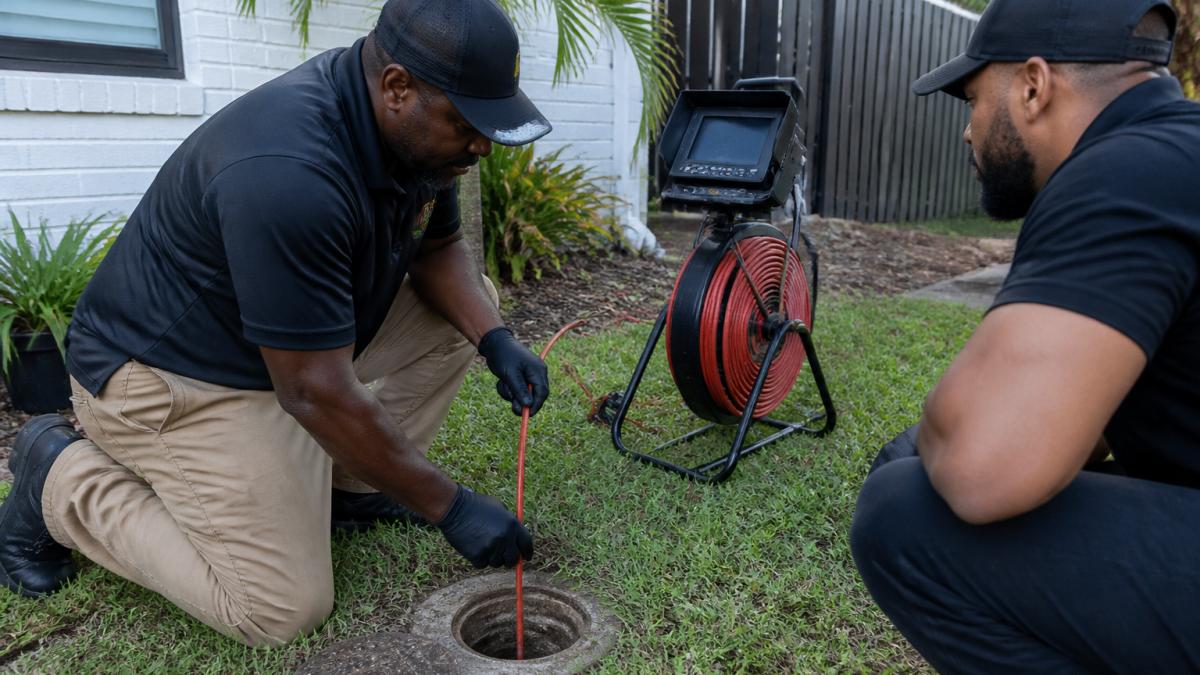
A typical job follows this sequence:
- Camera inspection to map the damage and measure pipe diameter
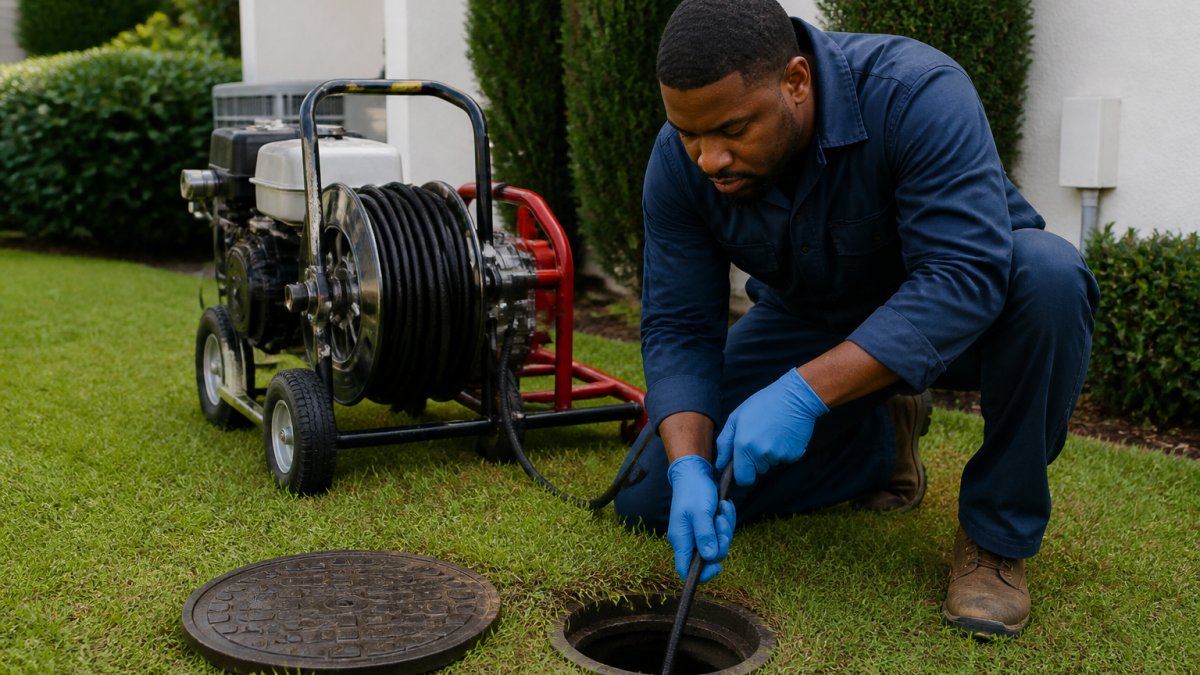
- Cleaning with hydro-jetting or snaking to clear roots, grease, and debris
- Method selection based on pipe condition, material, and length
- Installation of a liner or new pipe through the existing line
- Final camera pass to confirm the repair
That last step matters. A repair you cannot see is a repair you cannot verify, which is why we run the camera again before calling the job done.
Pipe Lining and Cured-in-Place Pipe (CIPP)
Cured-in-place pipe, or CIPP, is a rehabilitation method that pulls a resin-saturated liner into the damaged pipe and cures it in place against the pipe wall.
The liner is carried in on an inflatable bladder, pressed against the pipe interior, then cured with heat or ambient temperature.
CIPP works best on pipes that are cracked or corroded but still round and intact. It will not fix a collapsed section.
Pipe Bursting Sewer Repair: Pulling a New Line Through the Old One
Pipe bursting sewer repair pulls a new pipe through the old one while a bursting head fractures the existing pipe outward into the surrounding soil. It is a full replacement method, not a lining method, and it is generally used when the old pipe is too far gone for a liner.
Why a Sewer Camera Inspection Comes Before Any Repair Decision
A sewer camera inspection is a video survey of the inside of your sewer line, and it is the single most important step before any repair. Without it, a contractor is guessing.
Homeowners are often burned when a contractor announces a full replacement and starts digging without evidence or explanation.
A camera inspection can show:
- The exact location and depth of the damage
- Whether the problem is a blockage or a structural break
- Pipe material and diameter
That footage determines whether you need cleaning, lining, bursting, or open-trench replacement. If you want to see what is actually inside the line before anyone picks up a shovel, you can book a sewer camera inspection and get a straight answer.
Which Pipe Damage Qualifies for No-Dig Repair (and What Rules It Out)
No-dig repair qualifies when the pipe is damaged but still structurally sound enough to guide a liner or accept a bursting head. Cracks, corrosion, root intrusion, and joint separation are common candidates.
Here is the honest list of what rules a line out:
- Collapsed pipe that has lost its shape entirely
- Severe offset joints where sections no longer align
- Pipe that has bellied or sagged and holds standing water
The distinction between a clog and a damaged pipe matters here. A camera tells you which problem you actually have, so you can see our drain cleaning and repair options if the issue turns out to be a blockage rather than a break.
Watch out: a contractor who quotes a lining job before running a camera is selling you a method, not a fix. Ask to see the footage.
Pipe Lining vs. Pipe Bursting vs. Open-Trench Replacement
The right method depends on pipe condition, not preference. Here is how the three compare on the factors that actually decide the job:
| Method | Best For | Pipe Condition Required | Access Needed | Disruption | New Pipe? | Typical Service Life |
|---|---|---|---|---|---|---|
| CIPP lining | Cracks, corrosion, root intrusion, joint separation | Pipe still round and structurally sound enough to hold a liner | One cleanout or a single small pit | Minimal, no yard excavation | No, lined inside old pipe | Long-term; liner carries its own structural rating |
| Pipe bursting | Collapsed, severely deteriorated, or root-crushed line | Pipe can be fractured outward; path must be clear | Two pits (entry and exit) sized for the bursting head | Small pits, no full trench | Yes, full replacement | New pipe, fresh service life |
| Open-trench | No usable access, severe misalignment, bellied line, or damage neither method can reach | Any condition | Full trench along the line | Major excavation and restoration | Yes, full replacement | New pipe, fresh service life |
How to read the table. Start with the camera footage, not the price sheet. The footage tells you three things that decide the method: whether the pipe still holds its shape, whether the line is reachable through existing access, and whether the damage is localized or runs the length of the pipe.
- If the pipe holds its shape, lining is usually the least invasive and fastest option. The old pipe stays in place and the liner becomes the new flow surface.
- If the pipe has lost its shape, collapsed, crushed, or badly offset, a liner has nothing to bond to, so bursting or open-trench is the honest answer.
- If neither method can reach the problem, no cleanout, no room for a pit, or a line that has bellied and holds standing water, open-trench remains the fallback.
Pipe material matters. Cast iron, clay, and concrete lines behave differently under a bursting head; some fracture cleanly, others do not. A contractor should confirm material from the camera footage and, where needed, from a small test pit before committing to a method.
The decision guide is simple: if the pipe holds its shape, line it. If it does not, burst it. If neither can reach the problem, dig. Get the camera evidence first, then let it pick the method.
What Drives Trenchless Sewer Repair Cost
Trenchless sewer repair cost depends on several factors, and any honest contractor will tell you the same: pricing depends on the specifics of your line, and you should get a written quote rather than a phone estimate.
The cost stack, in the order it hits your invoice:
- Inspection and diagnosis. A camera survey is the first line item and the one that determines everything after it. It is also the cheapest part of the job and the one you should never skip.
- Cleaning and preparation. Hydro-jetting or snaking to clear roots, grease, and debris is required before any liner or bursting head goes in. Heavy root intrusion or years of buildup adds labor and time.
- Access. A cleanout already in place keeps this low. If a pit must be dug for entry, and pipe bursting needs two, excavation and restoration of that pit add cost even on a no-dig job.
- Pipe length and diameter. Cost scales with the run being repaired and the size of the pipe. Larger-diameter lines take more material and more labor per foot.
- Method. Bursting generally costs more than lining because it involves a new pipe, larger access pits, and more equipment. Lining is usually the lower-cost no-dig option when the pipe qualifies.
- Restoration. Minimal for no-dig, but not zero, access pits, cleanout repairs, and any surface touched during the job still need to be put back.
What the savings actually are. The savings usually show up in what you avoid: landscaping replacement, driveway repair, and weeks of downtime.
How to compare quotes fairly. Ask for an itemized quote, not a lump sum. A single number tells you nothing about where the money goes.
Pricing depends on pipe condition, access, and scope, so request a quote for your line. What you can do is insist on a written, itemized quote after a camera inspection, and treat any phone estimate as a placeholder, not a price.
Permits, Warranties, and How to Verify the Repair Was Done Right
Permits and warranties are where cheap jobs cut corners. Sewer work typically requires a permit, and a legitimate contractor will pull one and stand behind the work in writing.
Ask three questions before hiring:
- Will you pull the permit, and can I see it?
- What does the warranty cover, and for how long?
- Will you show me the final camera footage?
That last one is your proof. A post-repair camera pass confirms the liner is seated, the joints are sealed, and the line flows. No footage, no confidence.
Before you commit, it also helps to know who you are hiring. You can learn more about our company to check credentials and see how we operate before any work begins.
Schedule a Sewer Camera Inspection With Authentic Plumbing Services
A backed-up line, a soggy patch in the yard, or a drain that keeps slowing down all point to the same first step: find out what is actually wrong before anyone digs.
At Authentic Plumbing Services, we use a camera inspection to identify the real cause before any work begins. We are open 24 hours, 7 days a week. Led by Rohan Taylor, our team serves homes, condos, and businesses.
Frequently Asked Questions
Can a sewer line be repaired without digging up the yard?
Yes, in many cases. Professional sewer repair without digging uses the existing pipe as the pathway, working through a cleanout or a small access pit rather than a long open trench. Pipe lining pulls a resin-soaked liner into the old pipe and cures it in place; pipe bursting pulls a new pipe through while fracturing the old one outward. Both leave lawns, driveways, and flooring intact. The method only works if the pipe is the right material and condition, which is why a camera inspection comes first.
What is the difference between pipe lining and pipe bursting?
Pipe lining creates a new pipe inside the old one. A resin liner is inserted, inflated against the pipe wall, and cured, so the host pipe stays where it is. Pipe bursting destroys the old pipe: a bursting head fractures it outward while pulling a same-size or larger new pipe behind it. Lining suits cracks, corrosion, and root intrusion where the pipe shape holds. Bursting handles collapsed or badly offset pipe and can increase diameter. Your pipe material and the condition found on camera decide which one applies.
How much does trenchless sewer repair cost?
Trenchless sewer repair cost depends on the method, the length of pipe being repaired, pipe diameter, depth, access difficulty, and what the camera inspection finds. A spot lining repair costs less than a full-length replacement, and pipe bursting typically runs higher than lining because it replaces the pipe. Landscaping or driveway restoration is usually minimal compared with open-trench work. Ask for an inspection and a written estimate before work begins.
When is trenchless sewer repair not possible?
No-dig repair fails when the existing pipe cannot support the process. Severe collapses, pipes that have lost their shape, heavy root clusters filling the line, and back-pitched sections that hold standing water can rule it out. Cast iron that has crumbled or clay tile that has shifted out of alignment may also need open-trench replacement. Some properties lack a usable cleanout or have pipe runs under structures with no access point. A sewer camera inspection answers this before anyone quotes a method.
If your sewer line is failing, the worst move is guessing. Get a camera inspection first, understand your options, and choose the repair that fits your pipe. Get started with Authentic Plumbing Services and contact us for a quote on a real fix, day or night.