 how-to
7 Ways to Clear Grease From Kitchen Drains
Last Updated: October 25, 2026
Quick Summary
To clear grease from kitchen drains, start by pouring boiling water slowly in three stages, which melts fresh fat so it can flush through the pipe. If the clog is old or hardened, move to a plunger or drain snake, since heat alone won't remove solid grease. Use baking soda and vinegar for light films, and call a plumber if the same drain keeps backing up.
- Confirm a grease clog by slow draining, standing water, gurgling, and a gray film around the drain.
- If you don't know the pipe material, use hot tap water at 120-140°F instead of boiling water first.
- Pour half a cup of baking soda, then one cup of white vinegar, wait 15 minutes, and flush with hot water.
- Run hot water for 30 seconds after each dish session and empty sink strainers into the trash daily.
- Call a professional when water backs into a second fixture or three methods bring no improvement.
Table of Contents
- How to Tell It's a Grease Clog and Not Something Else
- How to Unclog a Kitchen Sink Drain: Start With Boiling Water
- How to Dissolve Grease in Pipes With Baking Soda and Vinegar
- Plunging and Snaking: Mechanical Ways to Clear Grease
- Safe Drain Cleaning Methods for Older Pipes and Sink Traps
- When to Stop DIY and Call a Plumber
- How to Prevent Grease Buildup in Drains
- Book a Drain Inspection Before the Clog Returns
- Frequently Asked Questions
How to Tell It's a Grease Clog and Not Something Else
Learning how to clear grease from kitchen drains starts with confirming what's actually blocking the pipe.
A grease clog is a buildup of fats, oils, and food solids that cool and harden inside the drain line.
Here's how a grease clog usually shows up:
- Water drains slowly, then speeds up, then slows again
- Standing water in the sink after washing dishes
- A gurgling sound from the drain or nearby pipes
Compare that to other blockages. A solid object like a utensil or a chunk of food causes an abrupt stop, not a gradual slowdown.
How to Unclog a Kitchen Sink Drain: Start With Boiling Water
Boiling water is the simplest first move, and it works best on fresh grease buildup near the drain opening. Heat melts the fat so it can flush through the pipe instead of clinging to the walls. But pouring a full kettle down the wrong drain can turn a slow sink into a repair bill.
Here's the method:
- Boil a full kettle of water.
- Pour it slowly in three stages, letting it sit for a few seconds between pours.
- Wait five minutes, then run hot water from the tap for a minute.
- Repeat once if the slow draining improves but doesn't clear.
Know Your Pipe Material Before You Pour
Safety starts with what the drain is made of. Boiling water at 212°F can soften PVC joints, warp the wax ring under a toilet, and crack a porcelain sink if you pour it in one sudden gush.
A safe rule of thumb: if you don't know what the pipe is made of, use hot tap water (120-140°F) instead of boiling water for the first attempt. It still melts fresh grease, just more slowly.
When Boiling Water Won't Work
This method fails on old, hardened grease. If the water just sits there, the clog is deeper or too solid for heat alone. It also fails on a fully blocked drain where water can't carry the melted fat away.
A common pattern: boiling water clears the sink for a day or two, then the slowdown returns. That means grease is coating a longer stretch of pipe than heat can reach, and it's time to read the snaking section below.
How to Dissolve Grease in Pipes With Baking Soda and Vinegar
The baking soda and vinegar combination is the most popular at-home remedy, and it does help with light grease films.
Follow this order:
- Pour half a cup of baking soda straight down the drain opening.
- Follow with one cup of white vinegar.
- Cover the drain with a plug or a rag to trap the reaction.
- Wait 15 minutes, then flush with hot water.
Add a squirt of dish soap to the vinegar for extra grease-cutting power. For how to dissolve grease in pipes that has been building for months, this method alone won't cut it.
Watch out: never mix baking soda and vinegar with a chemical drain cleaner already sitting in the drain. The reaction can splash back and burn skin.
Plunging and Snaking: Mechanical Ways to Clear Grease
Mechanical force clears what chemistry can't. A plunger and a drain snake or auger handle most sink clogs short of the main line.
Plunging steps:
- Block the second sink basin or the overflow hole with a wet rag.
- Fill the basin with enough water to cover the plunger cup.
- Seat the plunger flat over the drain and push down firmly.
- Pull up sharply, repeat 10 to 15 times, then release.
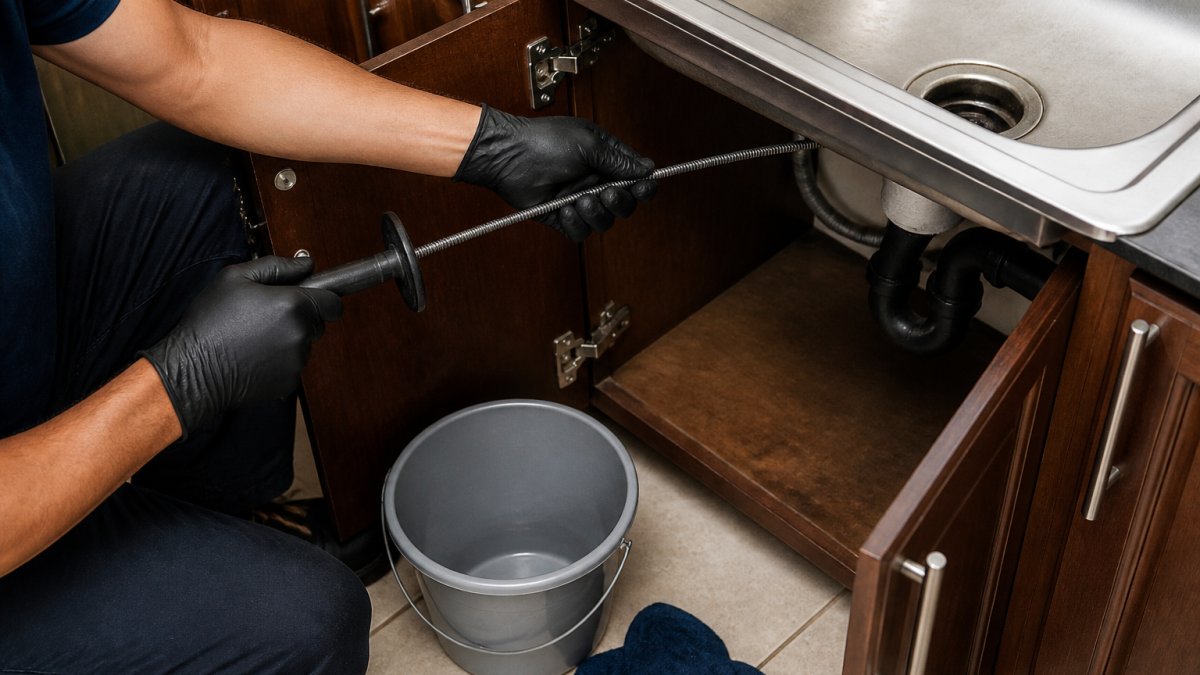
Snaking steps:
- Remove the sink trap first if the snake won't feed past it.
- Insert the auger cable into the drain opening.
- Crank clockwise until you feel resistance, then work through it.
- Pull the cable back slowly and wipe off the grease chunks you bring up.
A common mistake is forcing the cable with too much pressure. Let the auger do the work and you'll avoid scratching the pipe interior.
Safe Drain Cleaning Methods for Older Pipes and Sink Traps
Older homes need a gentler approach. Cast iron and galvanized steel pipes corrode from the inside, and harsh chemicals or aggressive snaking can finish them off.
Safer options for older plumbing:
- Hot water flushes in small, repeated doses
- Enzyme-based drain treatments that eat organic matter slowly
- Manual removal of the sink trap for a proper clean
Skip the strong chemical drain cleaner on old metal pipes. If you're dealing with cast iron and want the full picture, our guide on how to fix cast iron pipes walks through repair options step by step.
Cleaning the sink trap is also the best way to verify the clog isn't sitting right under the basin. Place a bucket underneath, unscrew the slip nuts by hand, and clear the trap.
When to Stop DIY and Call a Plumber
DIY has a stopping point, and most people push past it. The recurring clog is the clearest signal. If the same drain backs up within a few weeks of clearing it, the blockage is deeper than your tools can reach.
Call a professional when:
- Water backs up into a second fixture or the dishwasher
- You've tried three methods with no improvement
- The drain smells of sewage, not just grease
Grease that keeps coming back is often coating a long stretch of pipe that no hand snake can scrub. Hydro jetting in Miami, FL scours out grease, scale and roots that keep coming back. For standard backups, drain cleaning in Miami, FL covers slow drains, main line backups, and older pipe repairs, with someone available any hour.
How to Prevent Grease Buildup in Drains
Prevention is the only method that actually solves grease; every other fix on this list buys you time. Learning how to prevent grease buildup in drains comes down to three free habits, each of which needs to be done correctly to work.
1. Stop Pouring Fat Down the Sink
This is the habit most people think they already follow, and most people are wrong. Grease doesn't just come from bacon fat and frying oil. It comes from salad dressing, butter, dairy, meat drippings, peanut butter, and any sauce that solidifies in the fridge. If it hardens when cold, it hardens in your pipe.
How to dispose of cooking grease properly:
- Let the pan cool completely. Hot grease poured into a trash bag can melt through the plastic.
- Pour cooled liquid grease into a sealable container, a used jar, a coffee can, or a dedicated grease can with a lid.
- Scrape solid fat into the trash with a spatula. Don't rinse the pan under hot water and call it clean; that sends the residue straight down the drain.
- Wipe the pan with a paper towel before washing. The towel goes in the trash, not the sink.
2. Flush With Hot Water After Every Dish Session
Run hot water for 30 seconds after each dish session. This pushes residual fat through the trap and into the branch line before it cools. The key word is hot, lukewarm water just moves grease around without melting it.
A common mistake is running hot water while washing dishes, then shutting it off immediately. The last bit of greasy water sits in the trap and cools there.
3. Use a Strainer and Empty It Daily
Food scraps feed the grease layer. A strainer in every kitchen sink catches coffee grounds, rice, eggshells, and bits of fat that would otherwise bind with existing grease and narrow the pipe further. Empty it into the trash, not the garbage disposal, every day.
A Decision Framework for Readers With Recurring Clogs
If you're reading this because a clog keeps coming back, prevention alone won't fix it. Use this order:
| What you're seeing | What it means | What to do |
|---|---|---|
| Slow drain that clears with hot water, returns in days | Grease film on trap and branch line | Clean the trap by hand, then start the three habits above |
| Slow drain that hot water won't touch | Hardened grease deeper in the branch line | Snake the line, then flush with hot water weekly |
| Multiple fixtures slow at once | Blockage past the sink trap, likely main line | Stop DIY; call for a camera inspection |
| Sewage smell, not just grease | Possible vent or main line issue | Call a plumber before using the sink again |
| Problem | Fix | Why it works |
|---|---|---|
| Fresh grease film | Boiling water in stages | Melts fat before it hardens |
| Light buildup | Baking soda and vinegar | Loosens residue on pipe walls |
| Stubborn sink clog | Plunger, then drain snake | Mechanical force clears solids |
| Recurring clog | Camera inspection, then hydro jetting | Finds and scours the full blockage |
| Old metal pipes | Enzyme treatment, trap cleaning | Gentle on corroded walls |
Book a Drain Inspection Before the Clog Returns
A camera inspection answers the question every DIY fix leaves open: what is actually inside the drain line?
That matters most when a clog keeps returning. Book a drain inspection in Miami, FL and you'll know exactly what you're dealing with before anyone quotes a repair.
If you're ready to hand it off, our contact page has the phone number and a callback form.
Grease clogs rarely fix themselves, and the ones that keep coming back are telling you something.
Frequently Asked Questions
What dissolves grease in a kitchen drain?
Hot water is the simplest option, but baking soda and vinegar create a fizzing reaction that can loosen grease from pipe walls. For heavier buildup, a drain snake physically breaks up grease chunks. Chemical drain cleaners dissolve grease but can damage older pipes, so use them carefully. If the clog keeps returning, a plumber can use hydro-jetting to clear the entire drain line.
Can boiling water clear a grease-clogged drain?
Boiling water can melt and flush light grease buildup, but it works best on fresh clogs. Pour it slowly in stages rather than all at once. Avoid boiling water if you have PVC pipes or older plumbing, because the heat can soften or damage them. If the drain still drains slowly after two or three attempts, move to a mechanical method like a plunger or snake.
When should you call a plumber for a grease-clogged drain?
Call a plumber if water backs up into other fixtures, if you've tried plunging and snaking without success, or if the same drain clogs repeatedly. Recurring clogs often mean grease has built up deep in the drain line, which a sewer camera inspection can confirm. A professional can clear the full line with hydro-jetting and identify whether pipe damage is contributing to the problem.
How can you prevent grease from clogging a kitchen drain?
Never pour cooking grease, oil, or fat down the sink. Let it cool and wipe it into the trash or a sealed container. Use a mesh strainer to catch food particles, run cold water while washing dishes, and flush the drain weekly with hot water. These habits keep grease from coating pipe walls and reduce the chance of a recurring clog.